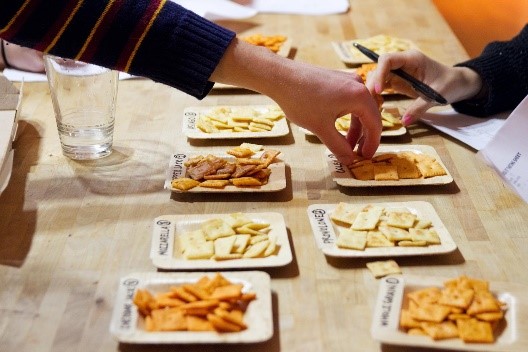

There’s a moment in every in-person study that an online survey simply cannot capture.
It happens when a shopper rounds the corner of an aisle, scans a shelf, and their hand hovers for half a second before grabbing one product instead of another. They might not even notice they did it. But that half-second can tell you more about packaging, placement, and purchase intent than a dozen rating-scale questions ever could.
Canadian Viewpoint (CVI) has been running intercepts, shelf tests, shop-alongs, and sensory studies for 45 years. The method itself isn’t new. The technology layered on top of it is, and so is what that technology lets you measure while while the method is happening.
Why Malls Are Still Great
A mall intercept sounds simple on paper. You station researchers in a high-traffic retail environment, approach shoppers, and invite them to participate in a quick survey or sensory test. CVI runs two permanent facilities in Toronto and Montreal, each drawing more than 100,000 demographically diverse consumers every week.
But did you know that these locations also have testing facilities? That means you can recruit people to the mall to test a new flavor or scent or a concept that really benefits from being seen or interacted with to get feedback. Another typical use case is recruiting people to the facility to conduct a shelf test, where a mock store shelf is built in the testing room and a trained CVI interviewer guides the participant through an exercise to understand decision choices. Pairing this with eye-tracking glasses adds a new layer of seeing exactly where the person’s eye is going on the shelf, then on the package itself, giving companies a better idea of whether their product is standing out among their competition.
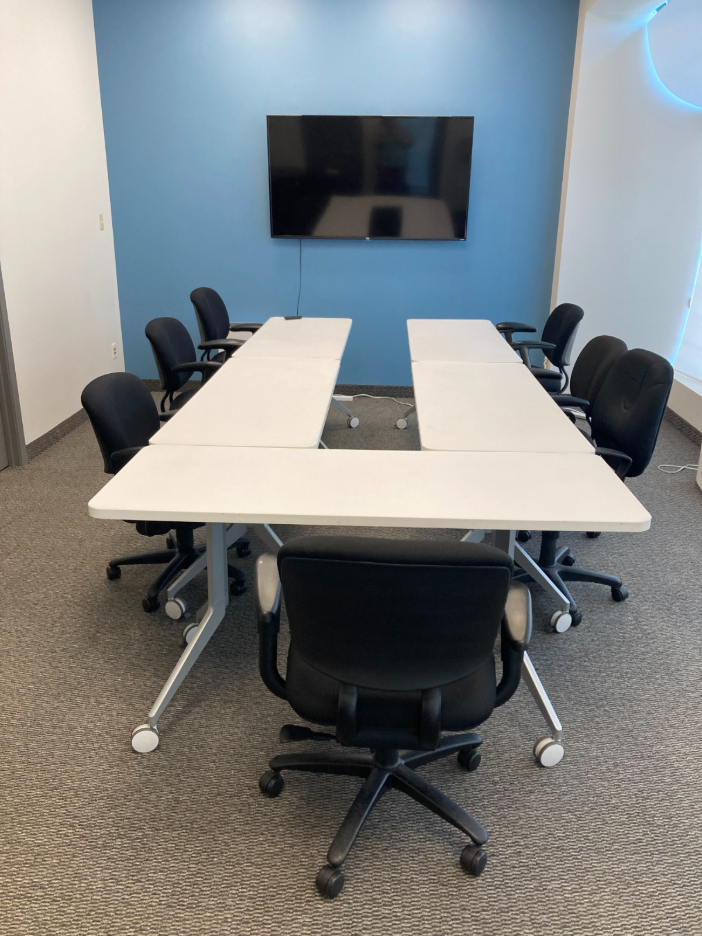
A room such as this one allows for CVI to control external influences and help participants focus during a session.
When the Study Goes Where the Shopper Goes
Shelf tests show you how a product performs in a controlled configuration. Shop-alongs show you how shoppers actually move. In a shop-along, a moderator accompanies a real shopper through a real store. In the process, they observe and note the decisions the shopper makes as they make them. Which category did they head to first? Did they consult their phone mid-aisle? Did they pick up a competitor’s product and put it back?
The gap between what shoppers say and do is one of the oldest problems in consumer research. A shop-along doesn’t close it by asking better questions. It closes it by being there.
Where the Technology Gets Interesting
The same tools CVI uses in online surveys can be deployed during in-person studies too. These include eye tracking, facial coding, heatmaps, and moment-to-moment touch response. The data you get is fundamentally different from what a webcam or mouse click can tell you when those tools are used in a physical environment.
Take mobile eye tracking. A participant wears lightweight eye tracking glasses while walking through a retail environment or standing in front of a shelf. The glasses record exactly where their eyes land, in what order, and for how long.
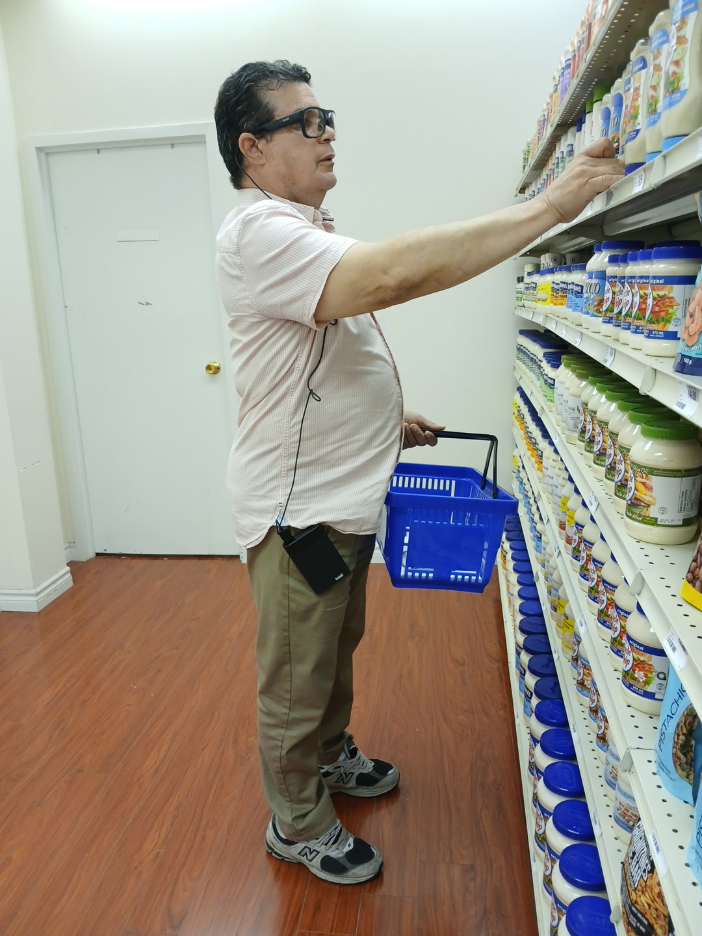
The glasses this person is wearing track where their eyes are looking while browsing the shelf. This adds eye tracking data to a shelf study.
You get far more than just knowing which product they looked at. That part you can observe with your own eyes. Instead, you can answer the more granular questions. Which element of your packaging drew the first glance? Was it the logo, the price tag, the product image, or the color block? Did their gaze move from the brand name to the callout, or did it skip the callout entirely? How long did they linger on your competitor’s product versus yours?
That level of detail can add layers to how brands approach packaging design, shelf placement, and visual hierarchy.
Facial Coding and Moment-to-Moment Response
Eye tracking tells you where someone looked and for how long. Facial coding tells you how they felt about what they saw.
CVI’s uses facial coding technology to capture micro-expressions during in-person studies – those brief, involuntary facial movements that can signal an emotional response. A participant might tell you a product looks “fine.” Their face might tell you they were confused, delighted, or indifferent in the split second they first noticed it.
Combine facial coding with Moment-to-Moment Touch response and you get a layered picture: what they saw, how they reacted emotionally, and – through the touch data – when those reactions peaked and faded. These tools aren’t just for online surveys anymore.
Sensory Testing Meets Neuroscience
One thing the measurement tools don’t fix on their own: participant quality. A sensory study is only as useful as the participants who show up. If you need your sensory study to have a specific demographic, CVI can do that. CVI can recruit for its in-person studies from its proprietary SurveyLion panel and existing intercept relationships – the same verified sources that underpin its online research. That means participants aren’t pulled from whoever is available; they’re drawn from a pool of verified Canadian consumers whose profiles are already known. You get genuine respondents matched to your target demographic.
CVI’s sensory testing facilities in Toronto and Montreal support research that engages all five senses. For food and beverage products, this means controlled environments where participants can evaluate aroma, texture, appearance, and taste. CVI can also support cannabis sensory testing in these facilities, serving the growing legal cannabis industry’s research needs.
The physical setup matters as much as the technology layered on top. You know what you’re measuring is a response to the product itself by isolating variables in controlled environments (standardized lighting, neutral serving conditions, no ambient odors from other sources).
Add neuro testing tools like facial coding and eye tracking to a sensory study and the depth of insight multiplies. You’re no longer limited to what a participant can articulate about why they preferred Sample B over Sample A. You see their physiological and emotional responses in real time, map attention patterns during the tasting process, and even identify the exact moment their expression shifted from neutral to positive – which might correspond to the aftertaste, the texture on first bite, or the scent when the package was opened. With these additional tools, you no longer need to guess which.
Why In-Person Is Here to Stay
There’s a temptation to assume digital tools will eventually completely replace in-person research. After all, why go to the trouble if so much can be done online?
You just can’t answer some questions through a screen, no matter how fancy the tools. Virtual tests can’t replicate the full sensory and contextual experience of standing in a real retail space. They can’t capture the peripheral distractions, the physical reach to a shelf, the weight of a package in someone’s hand, or the moment someone’s sense of taste was delighted by the flavors in that candy.
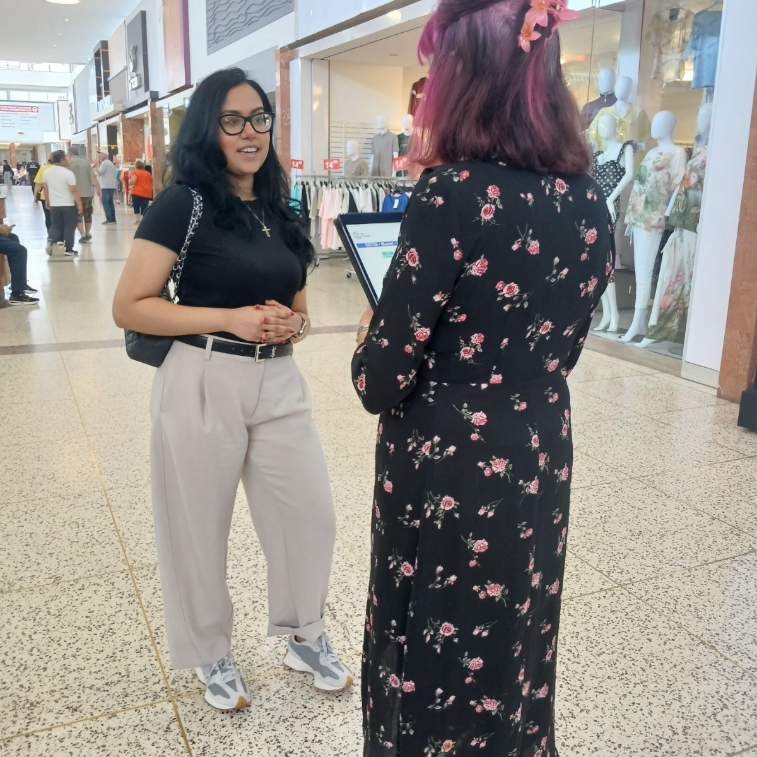
In-person research offers so many benefits, from instant recruiting via mall intercepts to irreplaceable elements like capturing eye tracking during a shelf study and noting distractions during a shop-along.
What the best in-person research does is combine the irreplaceable context of physical presence with the precision of modern measurement tools. You get the authenticity of real-world behavior and the granularity of digital data. That combination is what turns a shelf test from “they picked our product” into “here is exactly why they picked it, what almost stopped them, and what you should change on the package to make sure the next shopper does the same.” In-person research isn’t a workaround for what digital can’t do. It’s a starting point for decisions that digital data alone can’t support.